


The Album That Took Ten Years to Exist – In Conversation with fade into obscurity

Few genres have transformed my life quite like post-rock, yet I listen to far less new post-rock than I’d like. Let me take that back. I listen to less pure post-rock than I’d like to admit. The genre is old and is gracefully evolving as it always has over its rich, three-decade-long history – but let’s be real, you and I both know that there’s an archetype that comes to mind when we think post-rock, and it has a lot of crescendos. Yet, I have to admit that nowadays I tend to be more excited by albums that are post-rock-esque but take a hard left turn.
Of course, there are exceptions, and the grief aftermath, the debut album by fade into obscurity, is one of them. This album premiered in March on WherePostRockDwells, and has since gotten some very well-deserved traction.
This is unmistakably and unapologetically a post-rock album through and through – combining everything we love about the genre with layers upon layers of string instruments and orchestrations.
Not only is the grief aftermath remarkable – but it’s also locally released. fade into obscurity is a Malta-based project, albeit an anonymous one, which explains why the album has seemingly come out of nowhere. In this conversation, we’re not going to unmask the mind behind fade Into obscurity, but rather reveal the process and meaning behind the grief aftermath.
It seems like there are endless reasons for wanting to be an anonymous artist. There are a few common ones – to be more theatrical; to avoid persecution or personal criticism; to create more hype or mystique around your work. I don’t think any of these apply to fade into obscurity, though. What are your motivations for disassociating your name from the project?
fade into obscurity: You're right, none of those reasons apply. The whole project was born from the concept of anonymity and obscurity, which is what led to its name at a very early stage of its creation. This stemmed from years of being active in the local music scene and realising that there simply is too much emphasis on the persons behind the music, more so than the music itself. This leads to the music taking second stage: the performer and their status take precedence. I feel that the general opinion of that person taints how you react to that music, especially locally. I just didn't want that: anonymity enables you to listen to the music without bias or favour.
You recently released your debut album, the grief aftermath, after nine (ten?) years of working on it. Congratulations! Is there a reason why it took such a long time?
fade into obscurity: Ten if you count the year it took me to release it after it was done! The main reason for it taking so long is because I worked on it mostly alone: and that meant I needed a lot of time to let each part sit before I took creative decisions on it. I'd work on a song, then let it simmer for a while and come back to it later. That's how I ended up building so many layers: most of these songs were written over a span of years, not days – with one exception: an end. That track simply fell out of thin air one afternoon a month or so before the drum recording was scheduled and after everything had been planned for. The album also took so long because performing and recording each instrument solo, one layer at a time, takes a while...
Would you call The Grief Aftermath a concept album? And can you share how the artwork (by Julinu/Julian Mallia) ties into the album narrative?
fade into obscurity: Yes, the album tells a coherent story, at least in my mind. The tracks came to life individually and separately, but over time they formed a narrative as they lined up one after the other. I've also written the story behind each track, although I haven't released that. It's an intensely personal journey through grief: an accompaniment through solitude, disbelief, sorrow, and anger, as a form of solace and self-reflection.

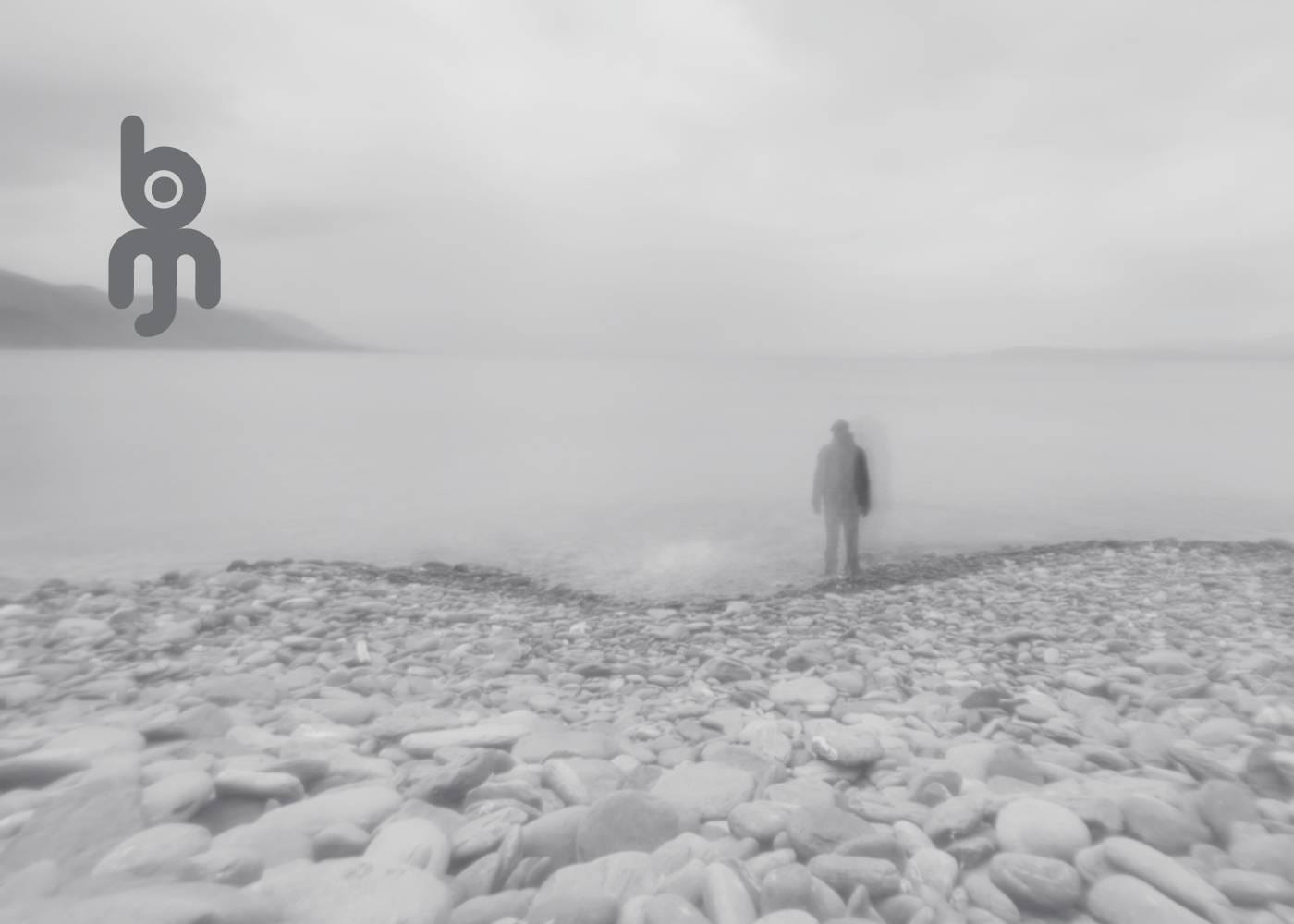
The artwork was Julinu's concept. Julinu poured his heart into my music, a fact I am most thankful for, and which shows from his excellent drumming. The artwork is intended to represent a deceitful sense of tranquillity: a serene feeling of absolute calm as the empty self is deconstructed and overrun.
Very late in the process and only a very short time before it was released, I also realised that the artwork also represents an Ainu (divine being) from Tolkien's universe: Nienna, the one who weeps. She represents deep sadness and grief but also pity, hope, and self-endurance. She matches everything the album stands for perfectly, and her presence fell into place accidentally, as most of the album did.
You played almost all the instruments on the album, which is a huge feat. What was that like? Was it fairly cohesive since you were recording all instruments for the same project, or did you find that different instruments inspired a different mindset or creative direction?
fade into obscurity: I set out with the vision to do that from the very beginning: this was an intensely personal project from the get-go. I honestly simply let the music lead: wherever it needed to go, I went. Once I realised I needed a cello, for example, I went out and bought one, and taught myself to play it enough for the album. There wasn't a particular plan or direction: just the direction each track chose to take, which I followed meticulously. This is why the album has so many extremes: a light in the dark is exclusively made up of many layers of bass aside from drums, while a track like at the edge of infinity has so many different instruments that I had to record it in three separate project files. It was all worth doing in my mind!
This is a bit cheeky – where do you see fade into obscurity in the next ten years?
fade into obscurity: Great question! The answer is that I have no idea. I haven't yet started writing a follow-up to the grief aftermath, and I wonder if I shall. All I hoped for in releasing it was for it to connect with people meaningfully: I just hope that this means someone will still listen to it in ten years' time and resonate with it.